URL copied!
Design

Design ROI: Measuring the Business Impact of UX Investment

An analytical perspective on how UX investment impacts revenue costs retention and competitiveness and why measuring design ROI matters for informed executive decision making.

Shekhar Kushawah
-
February 5, 2026
[Why Design ROI]Why Design ROI Matters

Business leaders no longer invest in design for aesthetics. They expect clear proof of business impact tied to revenue, retention, and efficiency.

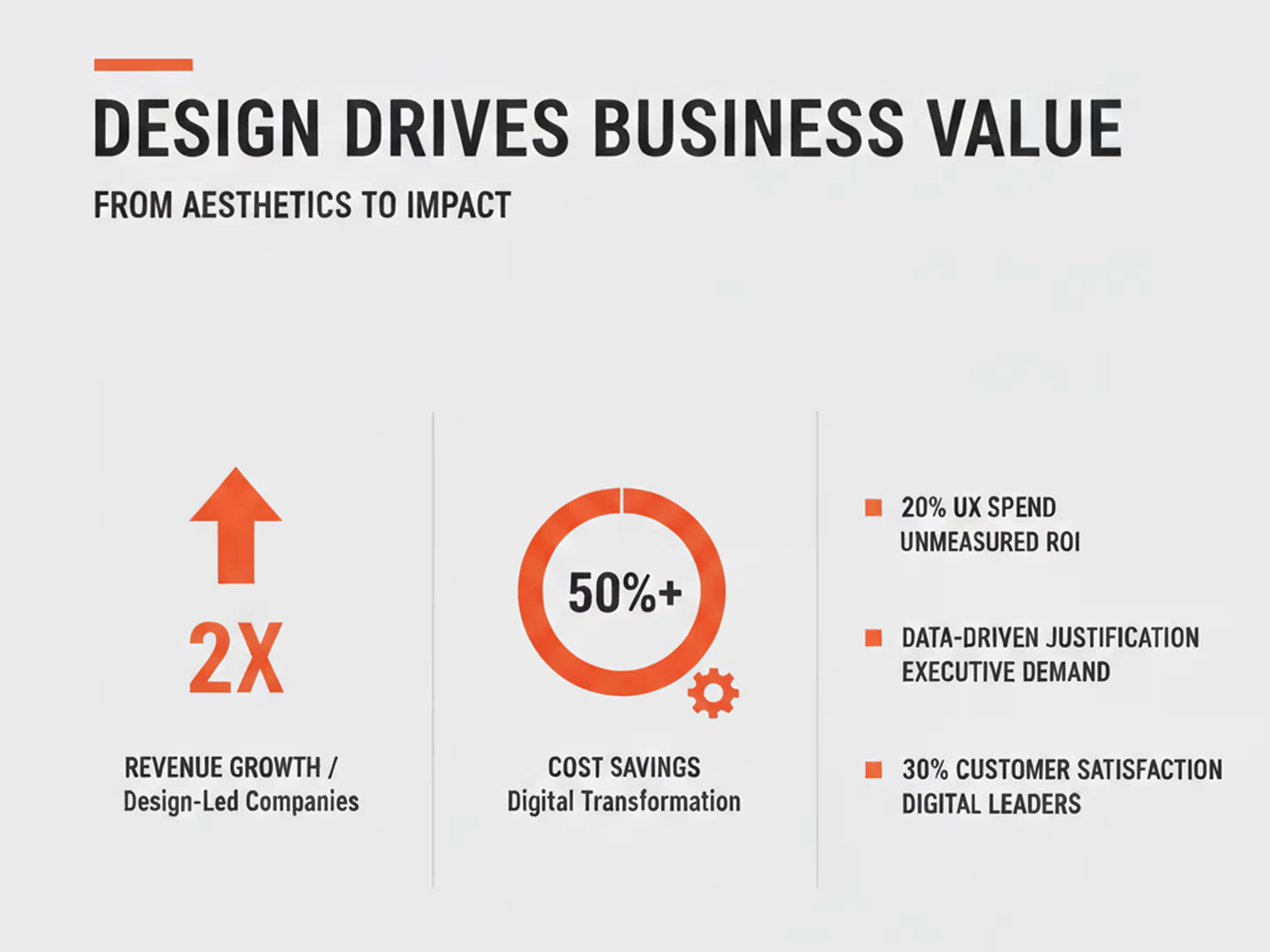
Companies embedding design deeply into operations outperform competitors by up to 2x in revenue growth. 50% of organizations realized over 20% cost savings by focusing on digital transformation.

Three factors drive urgency: software firms invest ~20% of development budgets in UX design without measurement frameworks; executives require data-driven justification; and digital leaders see 30% higher customer satisfaction than competitors.

[Design Business Impact]How Design Drives Business Impact

Revenue Growth

  • Well-designed interfaces boost conversion rates by up to 400%. Airbnb's redesign focusing on simplicity resulted in a 30% increase in bookings. Website redesign ROI typically ranges between 150% to 300% within 12 to 18 months.
  • These returns stem from higher conversion rates, increased average order values, and improved customer lifetime value.

Cost Reduction

  • Support ticket volume decreases when interfaces become intuitive. Nielsen Norman Group's research on intranet search showed organizations reducing annual costs from $750,000 to less than $14,500 through better UX.
  • Forrester modeling shows 351% ROI from UX tools like Figma through faster workflows. Fixing usability problems in development costs 10x less than post-launch correction.

Retention and Competitive Position

  • Companies investing over 10% of digital budgets into design see 1.8x higher customer retention. 88% of web users are less likely to return after poor user experience.
  • 75% of visitors assess business credibility based on website design. Apple's premium pricing stems largely from design quality. Amazon's marketplace dominance comes from frictionless user experience.


Type of image: ROI Infographics ( Image credits — Tangle )

[Measuring Design ROI]Measuring Design Impact

Key Metrics That Matter

  • Conversion Rate: Improving conversion rates by 200-400% through UX enhancements directly increases revenue without additional traffic costs.
  • Task Success Rate: The percentage of users completing core workflows without errors. Average success rates hover around 78%.
  • Time on Task: Walmart discovered every 1-second improvement in page load time increased conversions by 2%.
  • Net Promoter Score (NPS): Likelihood of user recommendations. UX redesigns can lift NPS by up to 20 points.
  • Customer Lifetime Value (CLV): UX improvements that increase retention directly expand CLV and compound revenue over time.

Connecting Design to Revenue

  • Calculate direct impact: If current conversion rate is 2% and UX improvements increase it to 3%, with 100,000 monthly visitors and $150 average order value, this 1% improvement generates $150,000 additional monthly revenue.
  • Support cost reduction: If poor UX generates 10,000 monthly support tickets averaging $15 resolution cost, improvements reducing tickets by 30% save $45,000 monthly.
  • Development efficiency: Agencies fluent in usability data are 69% more likely to exceed business goals. Design systems reduce development time and maintenance costs.

[Communicating Design Value]Communicating Design Value to Stakeholders

Executives require concise summaries connecting design to business priorities. Lead with business impact—revenue effects, cost reductions, risk mitigation—before explaining how design achieved these outcomes.

Use comparative framing: "30% conversion increase" resonates more than "conversion rate improved to 3.9%."

Calculate ROI using standard formulas: (Gain from Investment - Cost of Investment) / Cost of Investment. If $50,000 UX investment generates $200,000 additional annual revenue, ROI is 300%.

Present payback period showing when investment breaks even. Create executive dashboards displaying 5-7 critical metrics with trend lines revealing trajectory over time.

[Strategic Importance]The Strategic Imperative

Design ROI measurement is not optional for organizations competing on digital experience.

By 2026, companies without UX metrics will face customer turnover, poor repeat rates, and higher acquisition costs. UX investment delivers measurable returns across revenue, cost, retention, and competitive positioning.

The evidence is clear: every dollar in UX returns $100. Design-centered companies grow revenue 32% faster. Organizations investing in design see 1.8x higher retention.

Measurement transforms design from subjective craft to strategic capability. It provides evidence for budget decisions, guides resource allocation, and demonstrates value in language executives understand.

The question is not whether to measure design impact—it is whether to continue investing without understanding business effects, or to implement frameworks connecting UX quality to organizational success.

[Next Steps]Next Steps

Organizations ready to establish UX measurement should:

  • Define business-aligned metrics connecting design quality to outcomes leadership prioritizes.
  • Implement analytics capturing conversion paths, user behavior, and satisfaction data.
  • Establish baseline performance before optimization efforts.
  • Create regular reporting connecting design improvements to business results.


At Tangle, we help enterprises establish UX measurement frameworks connecting design quality to business outcomes through industry-standard metrics, custom KPIs, and executive reporting translating design impact into language stakeholders understand.

Strategic Consultation: Discuss how UX measurement can demonstrate design value and guide investment decisions.

Design should drive business outcomes, not operate on faith. Measurement makes that connection explicit and actionable.

Blog
Find What’s Trending in UI UX Design
GET IN TOUCH
Discuss your next project with us
Thank you! Your submission has been received!
Oops! Something went wrong while submitting the form.