Tech
The Rise of Vibe Coding: Building Your Own Apps in the Age of Disposable Software
Welcome to the era of "vibe coding", where describing what you want in plain English is all it takes to create working software.
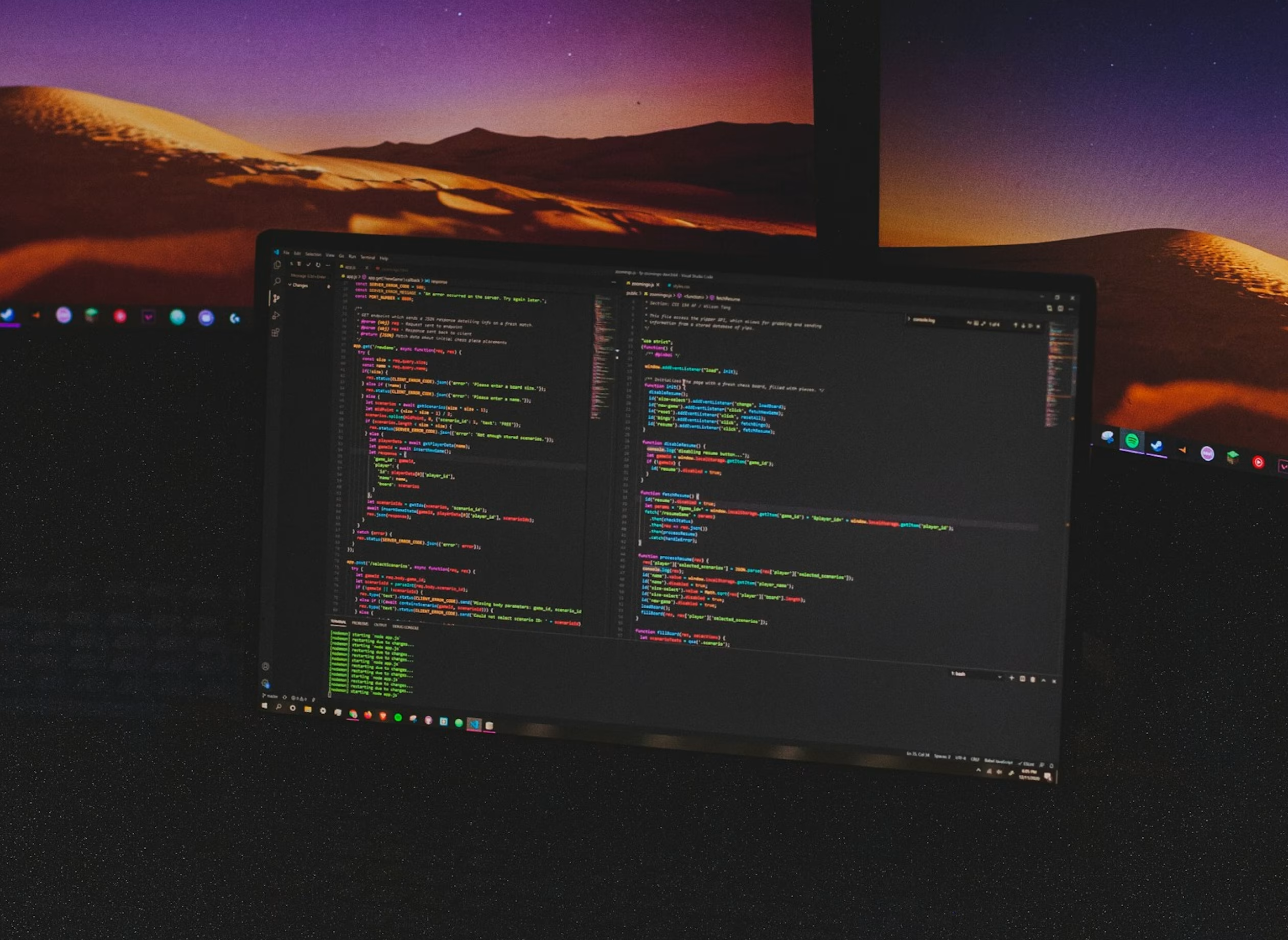
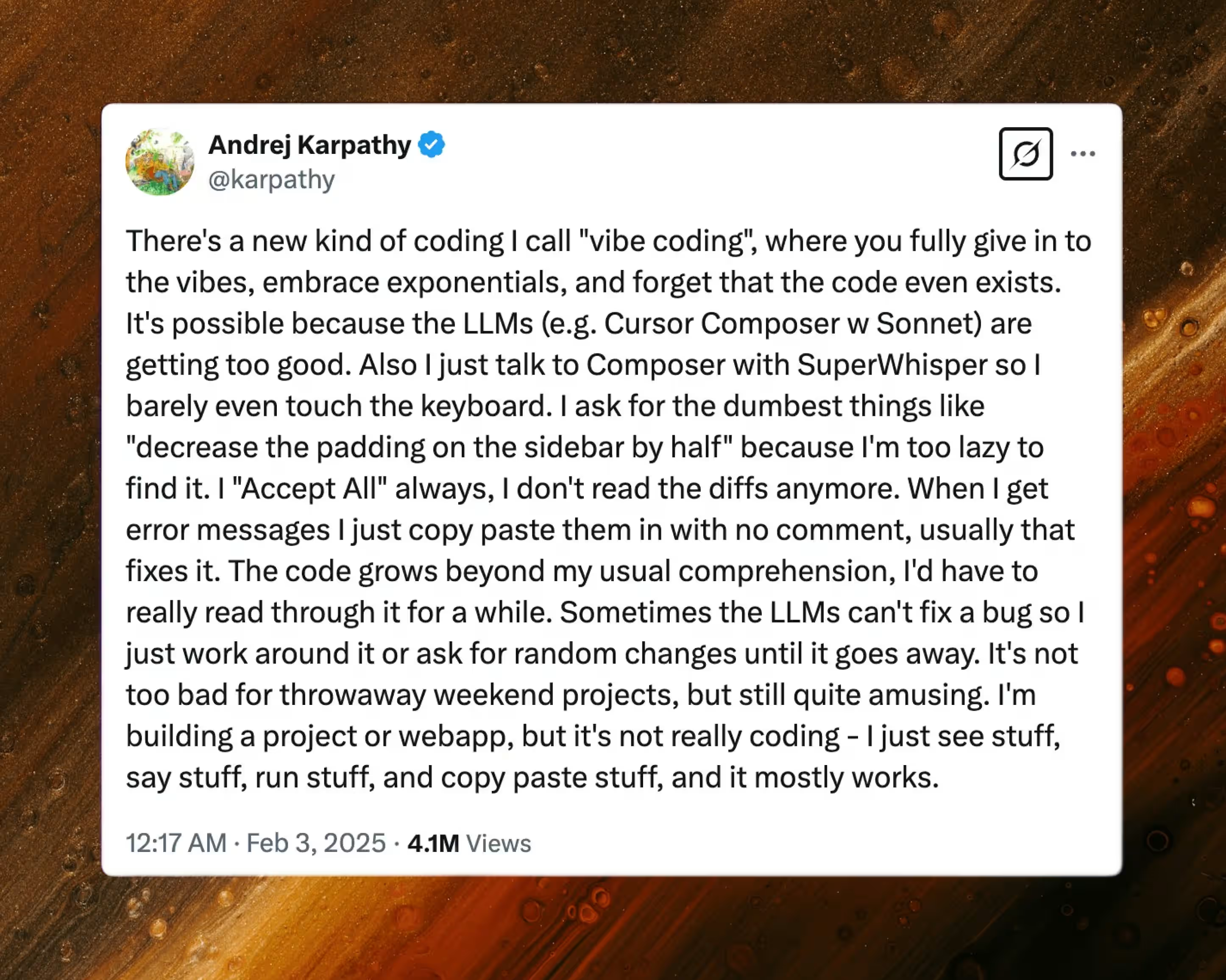
The term "vibe coding" was coined by AI researcher Andrej Karpathy in February 2025, and it's already reshaping how we think about software development. At its core, vibe coding is about giving in to the vibes, describing your app idea in natural language and letting AI handle the heavy lifting of actual code generation.
As Karpathy himself described it: you're "fully giving in to the vibes, embracing exponentials, and forgetting that the code even exists." Instead of wrestling with syntax and debugging for hours, you're having a conversation with an AI assistant about what you want to build.
The magic lies in how large language models have become sophisticated enough to translate human intent into functional code. What once required years of programming knowledge now just needs clear communication and a bit of patience.
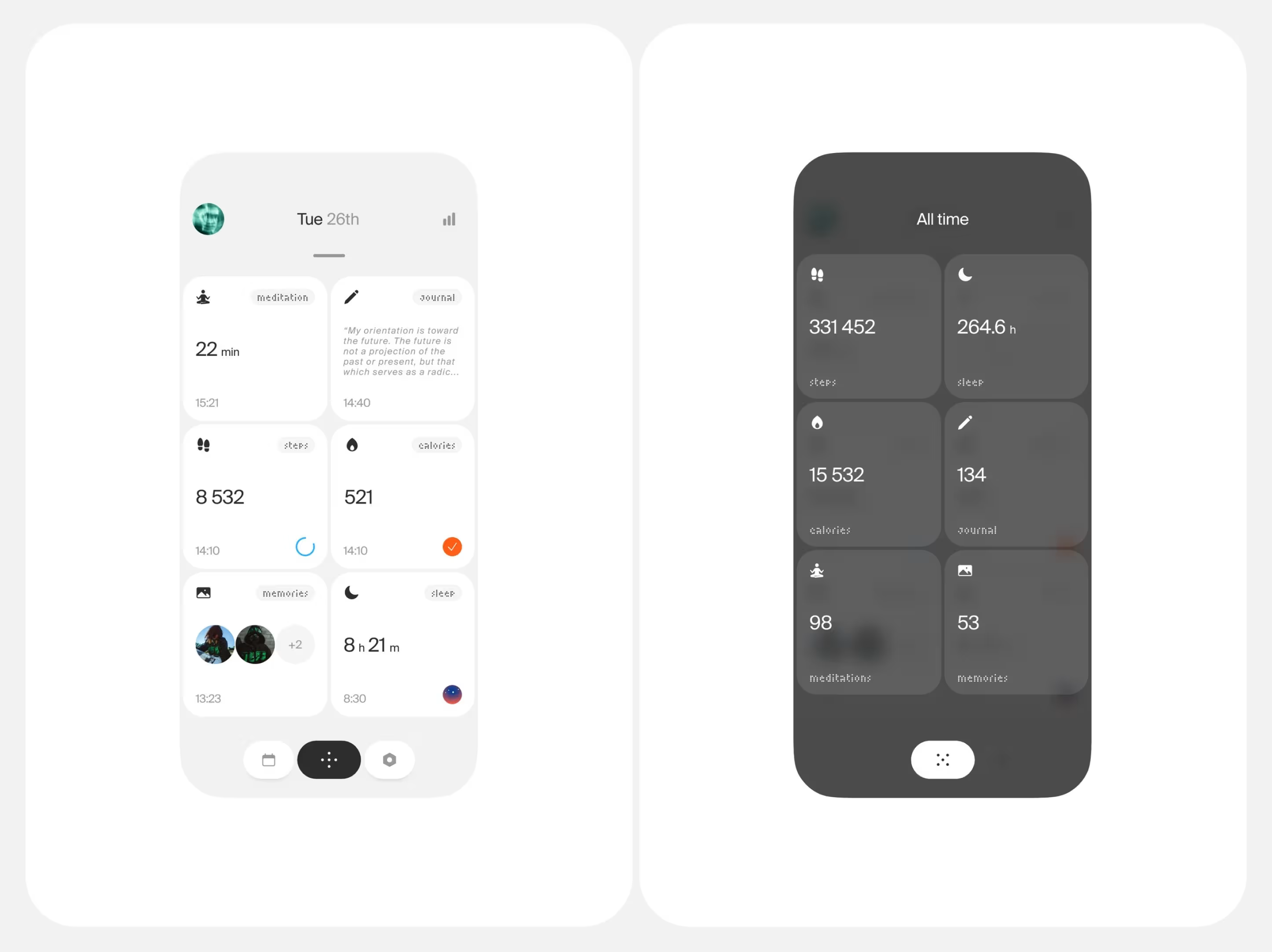
Perhaps the most exciting aspect of vibe coding is what New York Times journalist Kevin Roose calls "software for one"—highly personalized apps built to solve specific individual needs. Roose, who isn't a professional programmer, used vibe coding tools to create several personal productivity apps, including "LunchBox Buddy," which analyzes photos of his fridge contents and suggests packed lunch ideas.
This represents a fundamental shift in software consumption. We're moving from a world where we adapt our workflows to fit available apps, to one where we can quickly spin up custom solutions tailored to our exact needs.
Think about it: How many times have you used a productivity app that was 80% perfect but missing that one crucial feature? Or downloaded multiple apps trying to cobble together a workflow that should be simple? Vibe coding flips this equation. If you can describe your ideal solution, you can build it, even if you're the only person who'll ever use it.
Several platforms have emerged as leaders in the vibe coding space, each with unique strengths:
Each platform follows a similar pattern: you describe what you want, the AI generates the initial version, you test and refine through natural language feedback, and repeat until you have something functional.
We're witnessing the birth of a new software paradigm, disposable apps. Just as we've grown accustomed to disposable cameras for special occasions or disposable email addresses for privacy, we're entering an era of disposable applications.
Here's the revolutionary part: these apps don't need to be perfect, scalable, or built to last forever. They just need to solve your problem right now.
Need a tool to track your sourdough starter's feeding schedule with specific calculations for your kitchen's temperature? Build it this weekend. Want an app that automatically suggests outfit combinations from your wardrobe based on weather and your calendar? You can prototype that in an afternoon. Looking for a custom quiz generator for your kid's homeschool curriculum? A few prompts away.
This shift is particularly powerful for power users and knowledge workers who understand their own workflows intimately. You know what you need better than any product manager at a software company. Now you can actually build it.
Before we get too carried away with the hype, it's important to understand what vibe coding isn't. It's not a replacement for professional software development. The apps you build will likely be rough around the edges, potentially buggy, and definitely not suitable for mission-critical business applications.
Current AI tools struggle with:
A study from May 2025 found that 170 out of 1,645 Lovable-created web applications had vulnerabilities that could expose personal information. This isn't to discourage experimentation, but to emphasize the importance of understanding what you're building, especially when handling sensitive data.
The sweet spot for vibe coding is:
The most compelling aspect of vibe coding is sheer velocity. Tasks that traditionally took weeks or months can now happen in hours or days. This acceleration isn't just about convenience, it fundamentally changes how we approach problem-solving.
When building an app takes months and costs thousands, you need to be absolutely certain it's worth the investment. When you can prototype something in an afternoon, experimentation becomes cheap. You can test three different approaches to a problem, see which one actually works in practice, and iterate rapidly.
This rapid prototyping capability is gold for entrepreneurs testing business ideas, educators creating custom learning tools, or anyone trying to validate a concept before committing significant resources.
Ready to try it yourself? Here's a practical approach:
Looking ahead, we're likely to see vibe coding tools become as common as Google Docs or Canva. The ability to quickly create custom software will shift from a specialized skill to a general productivity tool.
Imagine a future where:
This democratization of app development doesn't mean professional developers will become obsolete, far from it. Complex systems, scalable products, and mission-critical software will always require architectural expertise and deep technical knowledge. But for the long tail of small, personal, specialized tools, vibe coding opens up possibilities that were simply impractical before.
The barriers to creating software have never been lower. You don't need to learn Python, understand databases, or master deployment pipelines. You just need an idea and the willingness to describe it clearly.
The apps you build might not change the world. They might only ever be used by you. And that's exactly the point. In a world saturated with generic software trying to serve everyone, there's something powerful about tools built for an audience of one.
So what will you build? That quirky productivity tracker you've always wished existed? That simple game to teach your niece math? That custom organizer for your growing collection of vintage postcards?
The vibes are good. The tools are ready. Your disposable app awaits.