Design
Jobs to be Done: The Research Framework That Makes Products People Actually Want
Enter Jobs to be Done, a framework with an 86% success rate that asks one deceptively simple question: What job are people hiring your product to do?

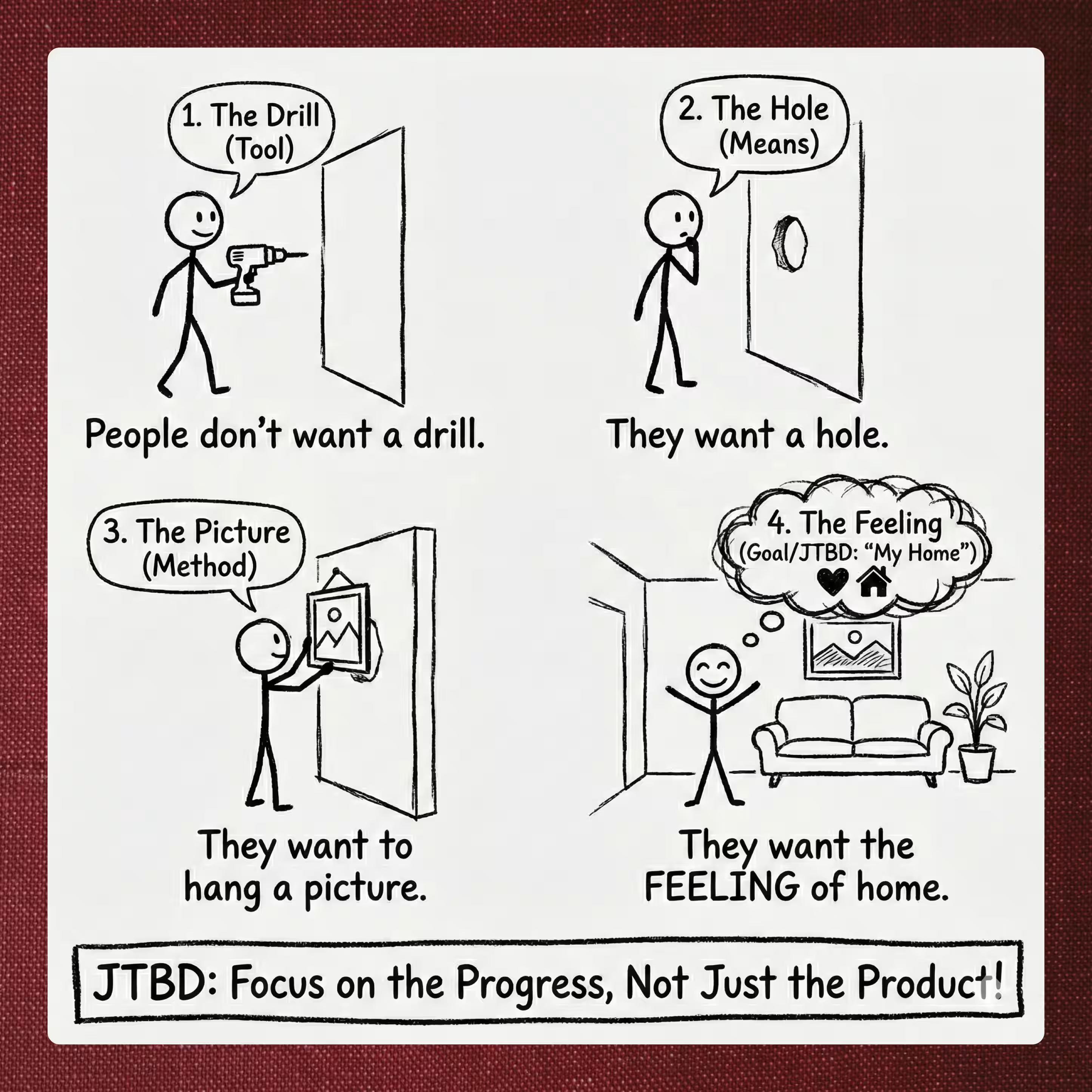
You've probably heard Theodore Levitt's quote: "People don't want to buy a quarter inch drill. They want a quarter inch hole."
Smart, right? But here's where it gets interesting. People don't really want the hole either. They want to hang a picture. And they don't even want to hang a picture. They want their living room to feel like home.
See what's happening? Each layer gets you closer to what people actually care about. The drill is just a tool. The hole is just a means. The picture is just a method. What they really want is that feeling of "this space is mine."
This is what JTBD forces you to do. Stop obsessing over your product and start obsessing over the progress people are trying to make. Your beautifully designed feature is just a tool they might hire to get there.
We've all written them. Those persona documents. "Meet Sarah, 34, marketing manager, loves yoga and artisanal coffee." We pin them to walls. We reference them in meetings. We feel very professional.
And then we build products Sarah doesn't use.
Why? Because knowing who Sarah is tells you nothing about why she does what she does. You know her age, her job title, her hobbies. But you don't know what problem kept her up at night. You don't know what made her finally say "enough, I need to fix this." You don't know what she's anxious about.
JTBD flips this completely. Forget demographics. Instead, ask: What situation triggered her need? What progress is she desperately trying to make? What's holding her back from switching to something new?
Tony Ulwick developed this framework back in 1991. Clayton Christensen refined it. And here's the kicker: companies using JTBD properly see an 86% success rate. Compare that to the typical 95% failure rate for new products. Yeah.
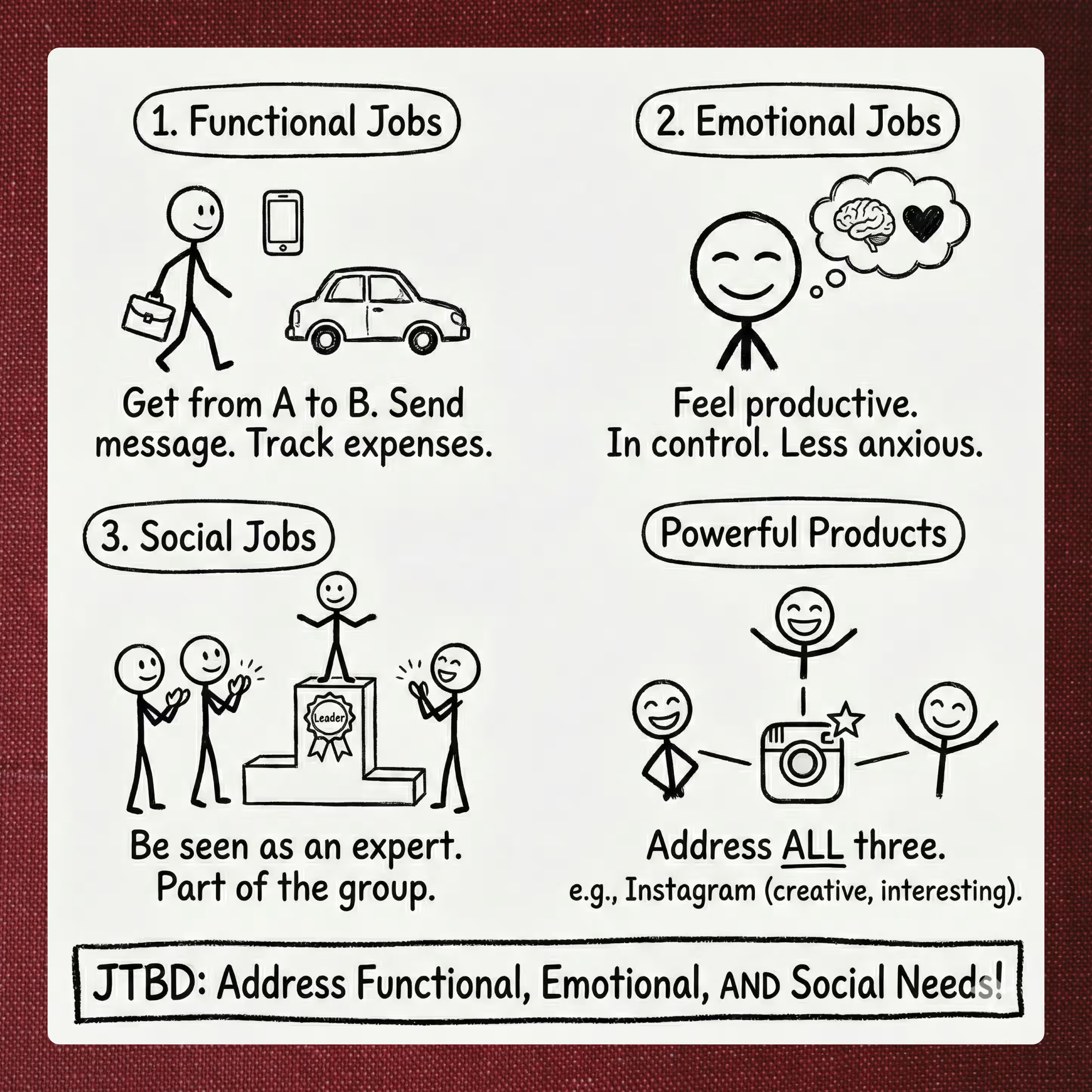
Not all jobs are the same. Some are practical. Some are emotional. Some are about how we want to be seen.
The most powerful products address all three. Instagram succeeded where others failed because it wasn't just about sharing photos (functional). It was about capturing beautiful moments that made users feel creative and appear interesting to their friends (emotional and social).
McDonald's wanted to sell more milkshakes. So they did what any sensible company would do. They asked customers what they wanted. Better flavors? Thicker? Colder? They made improvements. They ran tests.
Sales didn't budge.
When Clayton Christensen's team got involved, they tried something different. They didn't ask people what they wanted. They just watched. For 18 hours, they stood in a McDonald's observing every single person who bought a milkshake.
The pattern was weird. Almost half of all milkshakes were sold before 8:30 AM. To people driving alone. Who bought nothing else.
So they started interviewing these morning milkshake buyers. And the real story emerged.
These people had a boring, 23 minute commute ahead of them. They weren't particularly hungry yet, but they knew they would be by 10 AM. They needed something that would last the whole drive, something they could handle with one hand while driving, something more interesting than staring at traffic.
They'd tried bananas. Too quick, gone in three bites. Bagels? Too messy, cream cheese everywhere. Donuts? Sugar crash. Snickers bar? Too much guilt at 7:30 AM.
The thick milkshake? Perfect. It lasted the whole commute. It was interesting enough to keep them occupied. It filled them up until mid morning. No mess, no guilt, no problem.
Here's the kicker: McDonald's wasn't competing with Burger King's milkshakes. They were competing with bananas and bagels and the drive through at Dunkin'.
Once they understood the actual job, everything changed. Make it even thicker so it lasts longer. Add fruit chunks so there's something to discover mid sip. Move the machine to the front so people can grab and go. Prepaid swipe cards for the regulars.
Sales went up 7x. Seven times. And they discovered the market for "morning commute companions" was seven times bigger than they thought the milkshake market was.
Intercom was stuck. They'd built this amazing all in one platform. CRM, help desk, live chat, everything you could want. One product, one price, boom.
Except nobody was using all of it. IT departments wanted it as a help desk and ignored everything else. Marketing teams loved the campaigns but wouldn't touch the CRM. Nobody could figure out what Intercom actually was.
Growth had flatlined.
They brought in JTBD researchers who spent weeks interviewing customers. What emerged were four completely different jobs people were trying to get done. Four distinct reasons people "hired" Intercom.
So Intercom did something brave. They blew up their entire product. Split it into four separate solutions, each designed for one specific job.
The results? Website traffic 4x'd. They grew 500% in 18 months. Revenue tripled. And suddenly onboarding actually worked because they could focus on helping people accomplish one job instead of explaining seventeen features they'd never use.
That's the power of really understanding the job.
The hotel industry thought they knew what travelers wanted. Star ratings. Thread count. Breakfast buffets. Amenities.
Airbnb looked at the same travelers and saw completely different jobs.
Business travelers weren't hiring a place to sleep. They were hiring a way to not burn out from living in hotels 200 days a year. They wanted a kitchen to make eggs in the morning. A couch to decompress on at night. Something that felt less like transience and more like life.
Families weren't hiring beds. They were hiring memories. Experiences their kids would actually remember. "We stayed in a treehouse" beats "we stayed in a Marriott" every single time.
Budget travelers weren't even hiring cheap accommodation. They were hiring the ability to stay longer, see more, travel deeper without going broke.
When you understand these jobs, suddenly all of Airbnb's design decisions make sense. Professional photography? That's not about making places look good. That's about helping people imagine the experience. Reviews? Not just trust. It's proof this job gets done. Host profiles and local tips? That's the "experience it like a local" job in action.
1.4 billion guests. 4 million hosts. Built by understanding the jobs hotels never saw.
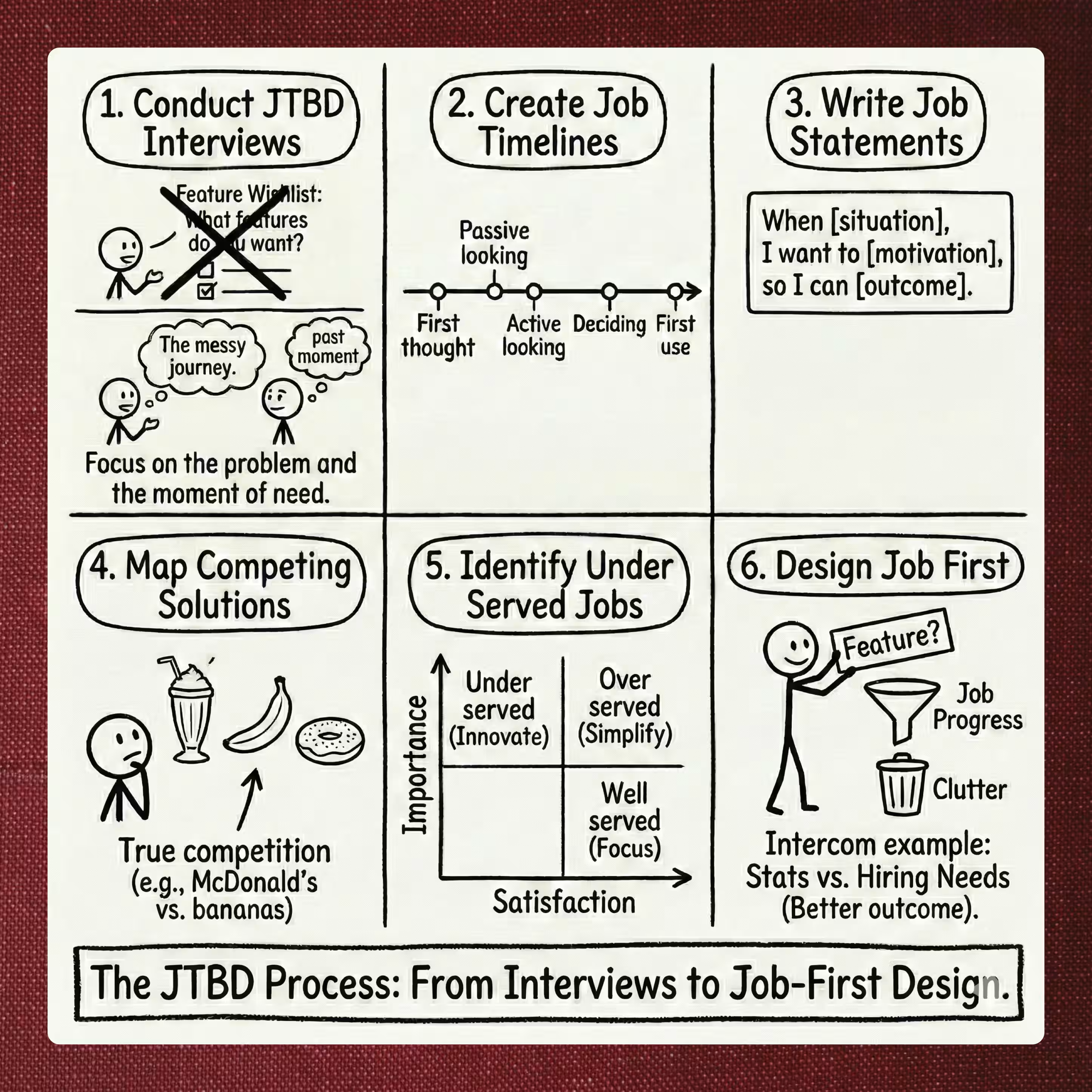
1. Conduct JTBD Interviews
Here's what you don't do: "Hey, what features would you like us to add?" That's not a JTBD interview. That's a feature wishlist session.
Instead, you're investigating a moment in time. The moment someone decided they had a problem that needed solving. Talk to people who just bought your product or just switched to it. Their memory is fresh. They just lived through the whole messy journey.
Key questions:
Look for the "first thought" moment when they realized they had a job needing done.
2. Create Job Timelines
Map each customer's journey from trigger to purchase: First thought, Passive looking, Active looking, Deciding, and First use.
Patterns emerge after 5 to 10 interviews showing the same triggers, anxieties, and criteria.
3. Write Job Statements
Use this formula: When [situation], I want to [motivation], so I can [outcome].
Examples:
Notice these don't mention any solution. No "I need better software." No "I want a milkshake." Just the progress they're trying to make.
4. Map Competing Solutions
Identify all ways customers solve the job, including non obvious competitors. McDonald's competed with bananas and bagels, not other milkshakes. Understanding true competition helps positioning.
5. Identify Under Served Jobs
Under served jobs are important but current solutions are inadequate. Innovate here. Over served jobs have solutions exceeding needs. Create simpler versions. Well served jobs need focus on related jobs.
6. Design Job First
Once you're clear on the job, design decisions get so much easier.
Does this feature help people make progress on their job? Keep it. Does it not? Kill it. I don't care if someone requested it. I don't care if it's clever. If it doesn't serve the job, it's clutter.
Intercom learned this the hard way. Everyone wanted "Inbox Stats." Seemed reasonable. But when they dug into the job, they found people didn't want stats. They wanted to know if they needed to hire more support people before things got crazy.
That insight changed everything. Not just what numbers to show, but how to show them, what actions to enable, the whole interface. Same feature request. Completely different implementation. Better outcome.
The case for JTBD is compelling:
It reveals the real competition. You might think you're competing with similar products, but your real competitors could be wildly different. Understanding this changes everything about positioning and differentiation.
It drives innovation, not just iteration. When you understand the job deeply, you can invent entirely new ways to get it done rather than making incremental improvements to existing solutions.
It aligns teams around outcomes. When everyone understands the job customers are trying to accomplish, cross-functional alignment becomes natural. Marketing can message the job, design can optimize for the job, engineering can build for the job, and customer success can ensure the job gets done.
It prevents feature bloat. When you're clear about the job, you can ruthlessly prioritize. Features that don't help users complete the job get cut, resulting in focused products users actually understand and use.
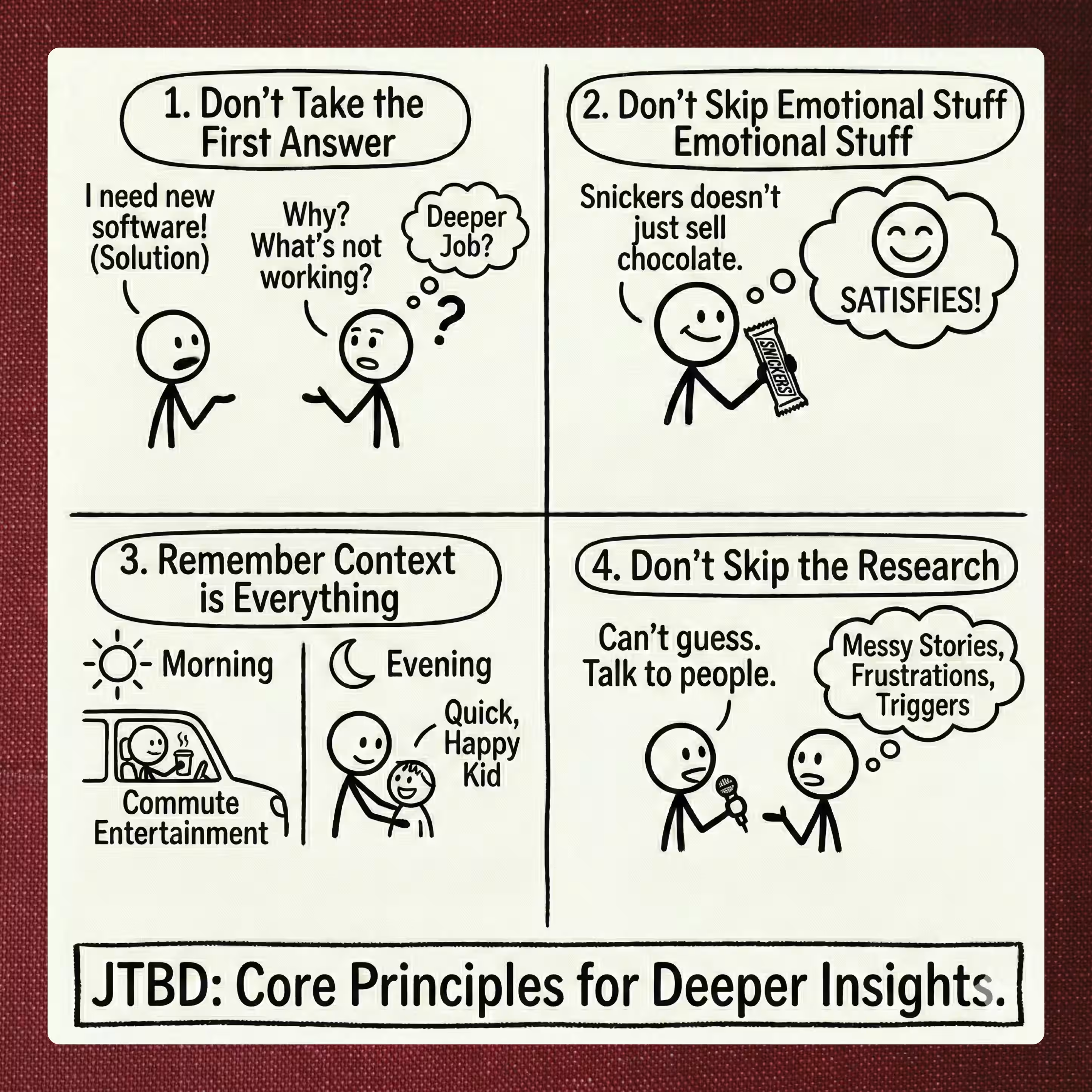
Don't take the first answer. When someone says "I need better project management software," they're giving you a solution, not a job. Keep asking why. What are you trying to accomplish? What's not working now? Go deeper.
Don't skip the emotional stuff. I've watched so many designers focus purely on functionality and wonder why nobody cares. Snickers doesn't sell chocolate and peanuts. They sell "SATISFIES." The emotional job of guilt free satisfaction. That's not marketing fluff. That's understanding the actual job.
Remember context is everything. The same person has different jobs in different situations. Someone might hire McDonald's for the "entertaining commute" job in the morning, but hire it for the "make my kid happy fast" job in the evening. Different situations, different jobs, different solutions.
And for the love of all that is good, don't skip the research. You can't just guess at jobs. You can't make them up in a workshop. The insights come from the specific, messy details of real people's stories. The moments of frustration. The switching triggers. The anxiety. You have to actually talk to people.
JTBD isn't just another framework to add to your toolkit. It's not a methodology to put in your portfolio. It's a completely different way of thinking about what you're actually doing as a designer.
When you stop asking "what features should we build?" and start asking "what job are people trying to get done?", everything shifts. Your roadmap makes sense. Your messaging clicks. Your team stops arguing about opinions and starts talking about evidence.
But mostly? You start building things people actually use. Things that solve real problems for real people in real moments of need.
The drill was never the point. The hole was never the point. The progress people are trying to make in their lives, that's always the point.